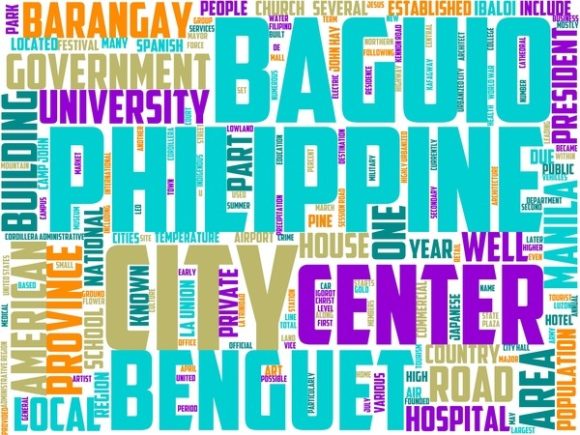
Baguio Wordart Banner: A Strategic Design Asset for Purpose-Driven Creators
Baguio Wordart Banner isn’t just another decorative graphic—it’s a hand-drawn, color-rich wordcloud built for intentionality. Its organic lines, balanced typography, and vibrant palette make it more than visually appealing; it’s a functional tool for communicators who understand that design choices carry meaning, shape perception, and influence action. When used with clarity of purpose, the Baguio Wordart Banner supports strategic goals across branding, education, marketing, product development, and personal expression.
Why This Wordart Matters Beyond Aesthetics
Unlike algorithmically generated word clouds, the Baguio Wordart Banner is crafted by hand—each curve, overlap, and hue considered. That human touch translates into authenticity, warmth, and visual cohesion—qualities audiences increasingly value in an era saturated with AI-generated uniformity. For entrepreneurs launching a wellness brand, educators designing classroom posters, or publishers developing e-book covers, this distinction matters. It signals care, craftsmanship, and alignment between message and medium.
More concretely, its flexibility makes it operationally valuable. Because it’s designed as a scalable vector-ready asset (or high-res raster), it adapts cleanly across formats: from 2-inch stickers on artisanal tea tins to 48-inch fabric banners at craft fairs. That cross-format consistency strengthens brand recognition without requiring multiple redesigns—reducing time, cost, and cognitive load in production workflows.
Strategic Use Cases: Where Intention Meets Application
Consider how the Baguio Wordart Banner functions differently depending on context—and why matching the tool to the objective improves outcomes:
- Promotional materials: When used on flyers or social media ads, it draws attention without competing with core messaging—its layered words act as atmospheric reinforcement rather than visual noise. A boutique fitness studio might embed terms like “resilience,” “balance,” and “growth” subtly behind a bold headline, reinforcing values before the reader even processes text.
- Product decoration: On apparel or home goods, it becomes part of the item’s narrative. A notebook featuring the Baguio Wordart Banner with words like “curiosity,” “draft,” and “reflect” speaks directly to writers and students—not as decoration, but as identity affirmation.
- Educational tools: Teachers use it in lesson plans not to replace content, but to activate prior knowledge. Placing a version focused on “ecosystem,” “biodiversity,” and “interdependence” at the start of a unit primes mental frameworks—making subsequent learning more anchored and recall more durable.
- Branding systems: As a secondary element—not a logo, but a supporting motif—it adds texture to brand guidelines. A sustainable fashion label might apply the Baguio Wordart Banner to swing tags, packaging inserts, and lookbook margins, building familiarity through repetition without monotony.
Planning Your Use: Questions That Prevent Wasted Effort
Before placing the Baguio Wordart Banner on anything, pause and ask:
- What outcome do I want this to support? Is it awareness? Emotional resonance? Behavioral nudge? If the goal is conversion, the banner should complement—not distract from—the call to action.
- Who is interpreting this, and what do they already know? A wordcloud full of industry jargon may energize insiders but alienate newcomers. Tailor word selection and density to your audience’s baseline understanding.
- Where will this live—and how much time will people spend with it? A magnet on a fridge gets seconds of attention. A poster in a quiet reading nook invites longer engagement. Adjust complexity accordingly.
- Does this align with other visual and verbal cues? If your brand voice is minimalist and precise, a dense, playful Baguio Wordart Banner may create dissonance—not harmony—unless deliberately contrasted for effect.
These aren’t theoretical questions. They’re filters that separate effective application from decorative default. Skipping them often leads to assets that look nice in isolation but fail to move the needle on real goals—like low sticker retention, underused printables, or mismatched merch that doesn’t resonate with buyers.
Risks of Using Baguio Wordart Banner Without Strategy
The biggest risk isn’t poor execution—it’s misalignment. Using the Baguio Wordart Banner because it’s available, trendy, or “just looks fun” can dilute messaging, confuse positioning, or unintentionally signal lack of focus. For example:
- A financial advisor using it on a retirement planning brochure with words like “adventure,” “spontaneity,” and “explore” may undermine perceived reliability—even if those words reflect personal values.
- A school using a generic version across all grade levels—without adjusting vocabulary or visual weight—misses developmental nuance. What inspires a 10-year-old differs from what resonates with a 16-year-old.
- A small business applying it identically across Instagram posts, email headers, and product labels without variation risks visual fatigue and reduced recall over time.
These outcomes aren’t flaws in the Baguio Wordart Banner itself—they’re symptoms of applying a powerful tool without clarifying its role in a broader system of communication.
How to Use It Intentionally: Practical Guidance
Start small and scale with insight. Here’s how seasoned creators approach it:
- Begin with editing, not placement. Most versions allow word customization. Replace placeholder terms with language tied to your specific audience and objective—even if only three words change. That simple step increases relevance dramatically.
- Test contrast and legibility early. Print a 4×6 version or view it on mobile before finalizing. Words meant to evoke feeling lose impact if they’re indecipherable at common viewing distances.
- Anchor it with hierarchy. Pair the Baguio Wordart Banner with one clear focal point: a headline, photo, or icon. Let it serve as context—not competition.
- Document usage rules. Note where and how you’ve used it across channels. Over six months, patterns emerge: which applications drive engagement? Which feel forced? Let data—not instinct—guide future iterations.
This isn’t about rigid control. It’s about cultivating awareness—so every use of the Baguio Wordart Banner advances something concrete: deeper connection, clearer understanding, stronger recall, or more meaningful interaction.
Long-Term Value: Beyond the First Project
When approached as part of a living design system—not a one-off download—the Baguio Wordart Banner compounds value. Educators build libraries of subject-specific versions. Brands evolve its color palette alongside seasonal campaigns. Product designers rotate word sets to match collection themes. Each iteration deepens familiarity while maintaining freshness.
That longevity comes from treating it as a flexible resource, not a fixed artifact. It works because it’s adaptable—but only when adaptability serves strategy, not convenience. The most effective users don’t ask, “Where can I put this?” They ask, “What do I want someone to feel, remember, or do—and how can this support that?”
That shift—from decoration to intention—is what transforms the Baguio Wordart Banner from a pretty graphic into a quietly powerful part of your creative infrastructure.